Why Automated Contribution Reminders Work
Nobody starts a group fund excited about chasing late payments.
You set up a birthday pool, a family contribution plan, or a monthly savings circle because the group has a goal. Then the real work begins: checking who paid, sending follow-ups, nudging the same people twice, and trying not to sound annoyed in the chat. That is exactly where automated contribution reminders change the experience. They do not just save time. They protect trust inside the group.
For communities that already know how susu, ajo, tontine, or chama works, this is not a theory problem. It is a practical one. Contributions usually fail for ordinary reasons: people forget, payment links get buried, organizers get busy, and no one wants to be the person publicly calling others out. A reminder system fixes those weak points before they turn into tension.
What automated contribution reminders really solve
At first glance, reminders seem like a small feature. In practice, they carry a lot of operational weight.
The biggest issue in informal group collections is not usually willingness. It is inconsistency. A member means to pay on Friday, then gets distracted. Another person never saw the message because it disappeared under 84 chat notifications. Someone else wants to pay but needs the link resent. By the time the organizer follows up manually, the due date has already slipped.
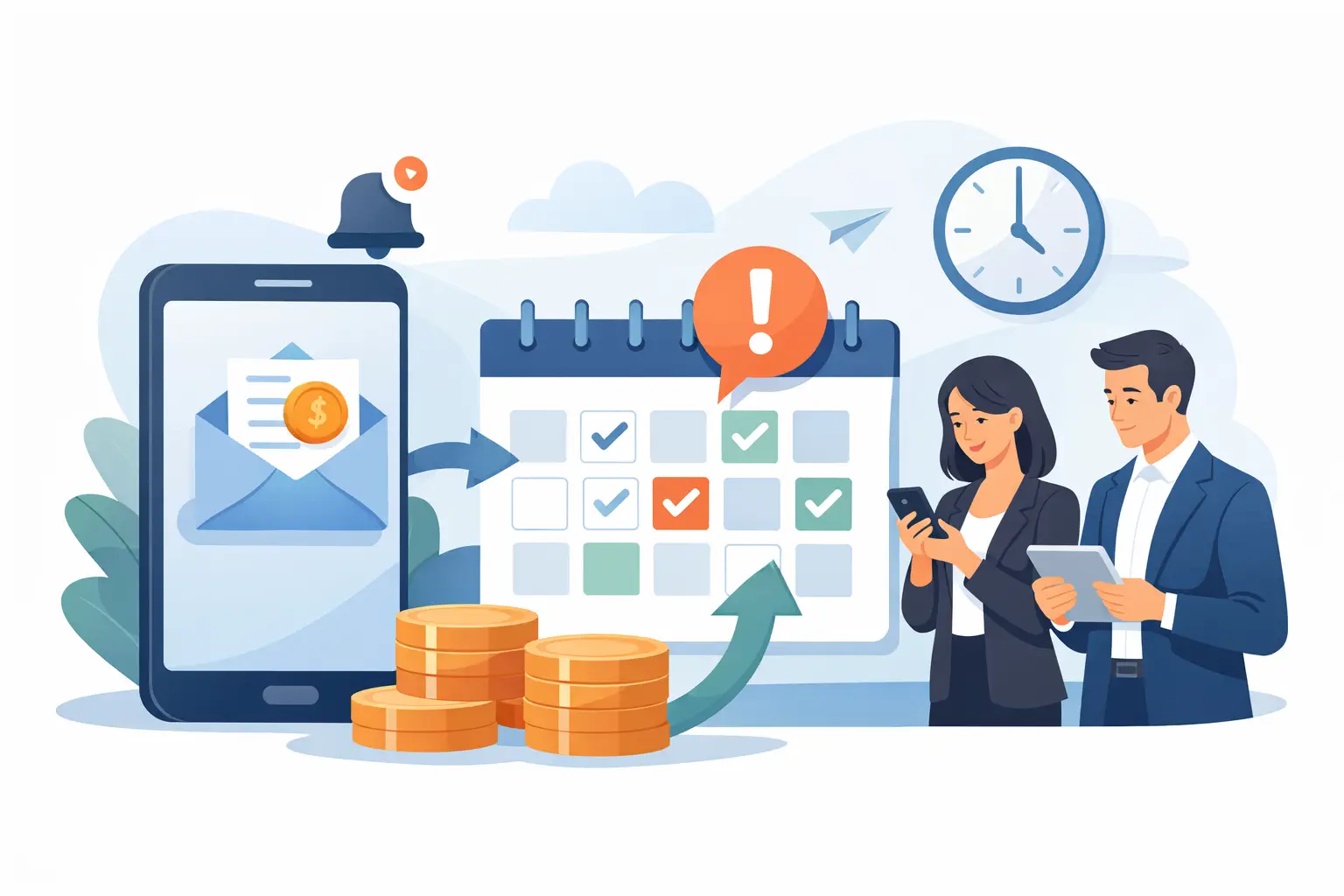
Automated contribution reminders reduce that gap between intention and action. They send the right prompt at the right moment, without requiring the organizer to remember every due date or monitor every participant manually. That creates a more reliable payment rhythm for the whole group.
There is also a social benefit that matters just as much as the financial one. Manual follow-ups can feel personal, even when they are not meant that way. A reminder from a system feels neutral. It applies the same rule to everyone, which makes the process feel fairer.
Why manual follow-ups break down
Most groups begin with simple tools because they are familiar. A group chat, a notes app, maybe a spreadsheet. That setup can work when the group is small and the collection is one-time. But once contributions repeat, or the number of participants grows, the cracks show fast.
The organizer becomes the system. They have to know who paid, who promised to pay, who needs a private reminder, and who should not be embarrassed in the main chat. That is a lot of emotional labor for something that should be straightforward.
Manual reminders also create inconsistency. One person gets reminded early, another late, another not at all. Even if nobody intends bias, the process can start to look uneven. In savings circles especially, where timing and discipline matter, that kind of inconsistency weakens confidence.
This is why reminders should not depend on an organizer's memory, mood, or availability. A structured process is not less human. It is often the best way to preserve relationships.
How automated contribution reminders improve collection rates
The strongest reminder systems do three simple things well. They are timely, they are clear, and they reduce the number of steps between receiving a reminder and making a payment.
Timing matters because a reminder sent too early gets ignored, and one sent too late creates panic. Clear reminders matter because people respond faster when they know exactly what is due, by when, and how to pay. And low-friction payment matters because a reminder without an easy action path still leaves room for delay.
This is why the best systems tie reminders directly to the contribution schedule and payment flow. Instead of sending a vague message to a group chat, the platform prompts each member based on the agreed cycle. That keeps the rhythm of the circle intact.
There is a compounding effect, too. When members see that reminders are regular and payments are tracked consistently, they take deadlines more seriously. Not because they feel pressured, but because the system makes expectations visible.
Consistency builds accountability
A fair process is one everyone can predict.
When reminders go out automatically before due dates, on due dates, and sometimes after missed payments, members learn the pattern. That pattern creates accountability without turning the organizer into a debt collector. People know they will be prompted, and they know others are being prompted too.
That shared structure matters in family groups, community funds, and workplace collections alike. It reduces the room for excuses and removes ambiguity about whether a payment was forgotten or simply overlooked.
Neutral reminders reduce social friction
This is where automation helps more than most people expect.
In informal collections, the hardest part is often not collecting money. It is protecting the relationship while collecting money. If an organizer sends repeated personal reminders, the member may feel singled out. If the organizer says nothing, everyone else carries the delay.
Automated contribution reminders shift the dynamic. The message comes from the system, based on the rules the group already agreed to. That makes the follow-up feel procedural rather than personal. For many groups, that one change removes a lot of unnecessary drama.
When reminders work best
Not every collection needs the same reminder logic.
For a one-time group pool, a reminder schedule may be simple: one prompt soon after launch, another before the deadline, and a final nudge on the last day. For a recurring savings circle, reminders need more structure because the group depends on repeated on-time contributions across multiple cycles.
The right setup depends on the payment behavior of the group. Some groups respond well to a single clean reminder with a payment link. Others need a sequence because members are spread across time zones, work shifts, or countries. Diaspora groups often benefit from especially clear timing because contributors may be balancing different banking hours and currencies.
There is a trade-off here. Too few reminders and people forget. Too many and members tune them out. Good automation is not about sending more messages. It is about sending the fewest messages needed to keep payments moving.
What to look for in an automated reminder system
If reminders are part of a contribution platform, they should support the group process from end to end.
First, the reminders should be tied to actual due dates, not sent manually whenever the organizer remembers. Second, members should be able to move from reminder to payment quickly. Third, the organizer should be able to see real-time status without chasing people across apps and screenshots.
It also helps when the platform creates transparency around who has paid and who has not, while keeping the process respectful. Visibility improves discipline, but it should not turn into public shaming. The goal is clarity, not pressure for its own sake.
This is where a product-first approach matters. A reminder feature on its own is useful. A reminder feature connected to tracking, payment collection, automated payouts, and member reputation is much more effective because it supports the full behavior loop.
One reason platforms like Chamly stand out is that they remove the patchwork setup many groups are used to. No chasing, no spreadsheets, no drama is not just a tagline. It describes what happens when reminders, payment links, tracking, and accountability live in one place.
Automated contribution reminders in savings circles
Savings circles depend on rhythm. If one person delays, the effect can ripple across the whole group.
That is why automated contribution reminders are especially valuable for recurring circles. They reinforce the cadence of the contribution schedule and make the rules feel real. Members are not relying on memory or goodwill alone. They are participating in a structured system that supports the commitment they already made.
This does not replace trust. It supports trust.
That distinction matters. In community finance, people often worry that more structure will make the process feel cold or overly formal. Usually the opposite is true. When expectations are clear and reminders are automatic, people spend less time managing tension and more time focusing on the purpose of the group.
For organizers, that means less admin work and fewer awkward conversations. For members, it means fewer missed due dates and less confusion. For the group as a whole, it means a stronger culture of follow-through.
The real value is peace of mind
People often buy into automation because they want efficiency. They stay with it because it gives them peace of mind.
An organizer should not have to spend their evening drafting reminder messages and checking bank transfers one by one. A family member should not have to wonder whether they missed the payment link. A circle member should not feel that the rules are flexible for some people and strict for others.
Automated contribution reminders create a calmer system. Payments become easier to manage, expectations become clearer, and the group can focus on the reason it came together in the first place.
If your collection process still depends on memory, screenshots, and repeated nudges in the group chat, the issue is not that your members do not care. The issue is that the system asks too much from people. A better process makes it easier for everyone to do what they already intended to do.